Health
Taking It Easy Is the Risk: Three Moves and Ten Minutes for Strength After 60
The biggest thing people over 60 get wrong is believing that exercise is risky and rest is safe. My answer is that taking it easy is the risk. Muscle you lose in your 60s is exactly what catches you when you trip in your 80s. The safest thing you can do for your future self is get a little stronger now.


A woman in her late 50s came to me less than a year after a knee replacement. She was afraid of her own knee. Every exercise started with her asking if it was safe. We went slow, and my rule with her was simple: you are in charge, we never push through pain. Months later she told me she had gone hiking, a real trail, no pain, something she had quietly assumed was over for her.
The knee was the same knee. What changed was the strength around it and what she believed she could ask of it.
"At my age I have to take it easy"
I hear some version of that almost weekly. The biggest thing people over 60 get wrong is believing that exercise is risky and rest is safe. My answer is that taking it easy is the risk. Muscle you lose in your 60s is exactly what catches you when you trip in your 80s. The safest thing you can do for your future self is get a little stronger now.
The CDC's facts about older adult falls list lower body weakness as a risk factor that can be changed. They also note that fear of falling leads people to cut back on activity, which makes them weaker and more likely to fall.
Strength, not just gentle movement
I think most older adults are undertrained on strength and overprescribed gentle movement. The industry hands people over 60 pool noodles and stretching classes when what protects independence is sitting down and standing up under control, carrying things, and pushing. Gentle has its place, but gentle alone does not stop the slide. I would rather see someone do five hard sit to stands than thirty minutes of waving their arms in a chair.
The CDC's guidance for older adults calls for at least 2 days a week of muscle-strengthening activities, plus balance activities. Here are three moves that need only a sturdy chair, a wall, and a kitchen counter.
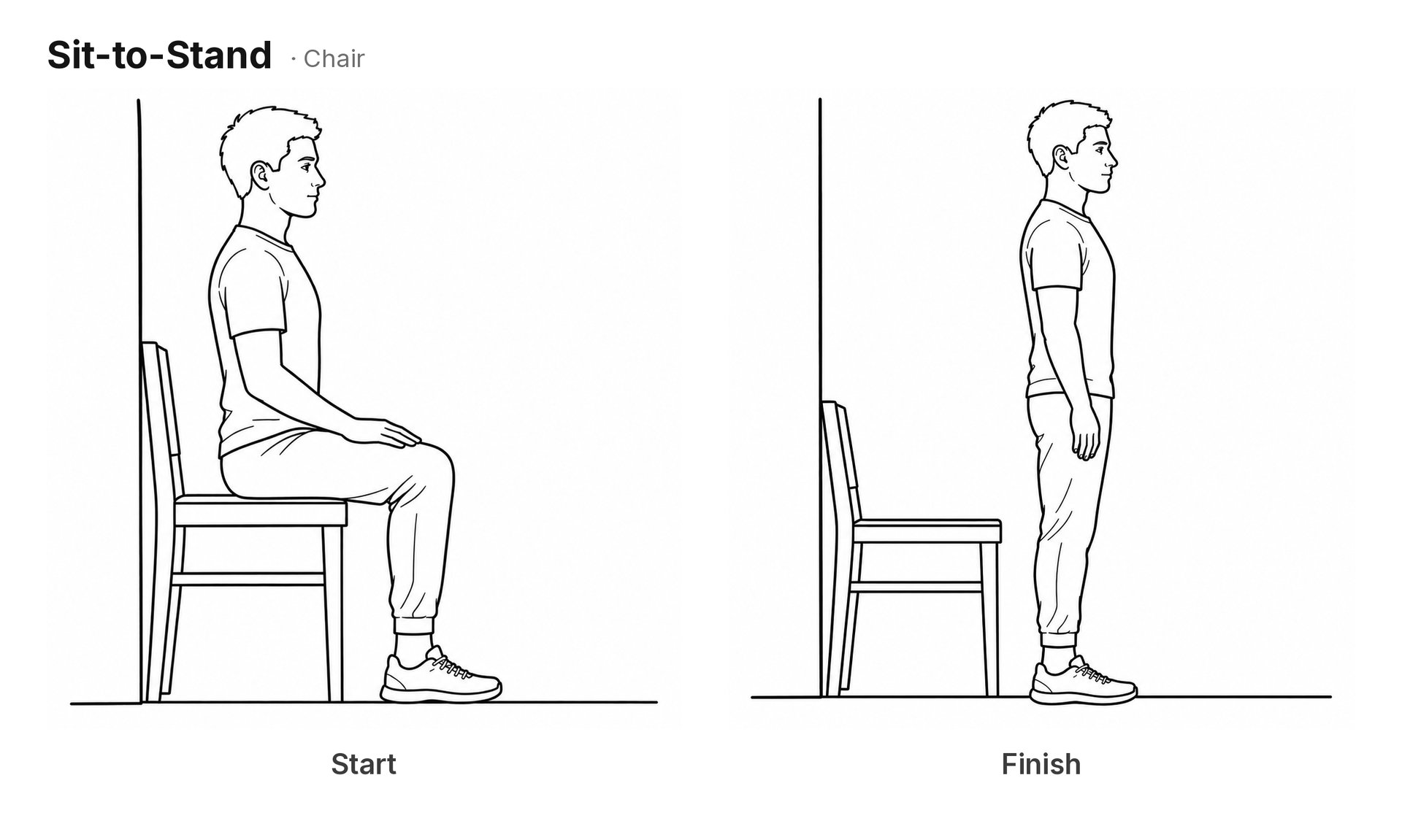
1. Sit to stand
This is the most useful exercise I know, because it is the move life tests you on every single day.
The cue: "Scoot to the edge. Feet under you. Nose over toes, then push the floor away."
The common mistake: Using momentum, rocking and throwing the arms forward instead of letting the legs work.
Easier: Raise the seat with a cushion, or let your hands push off your thighs. Harder: Slow the sit down to three seconds, then cross your arms, then hold something heavy.
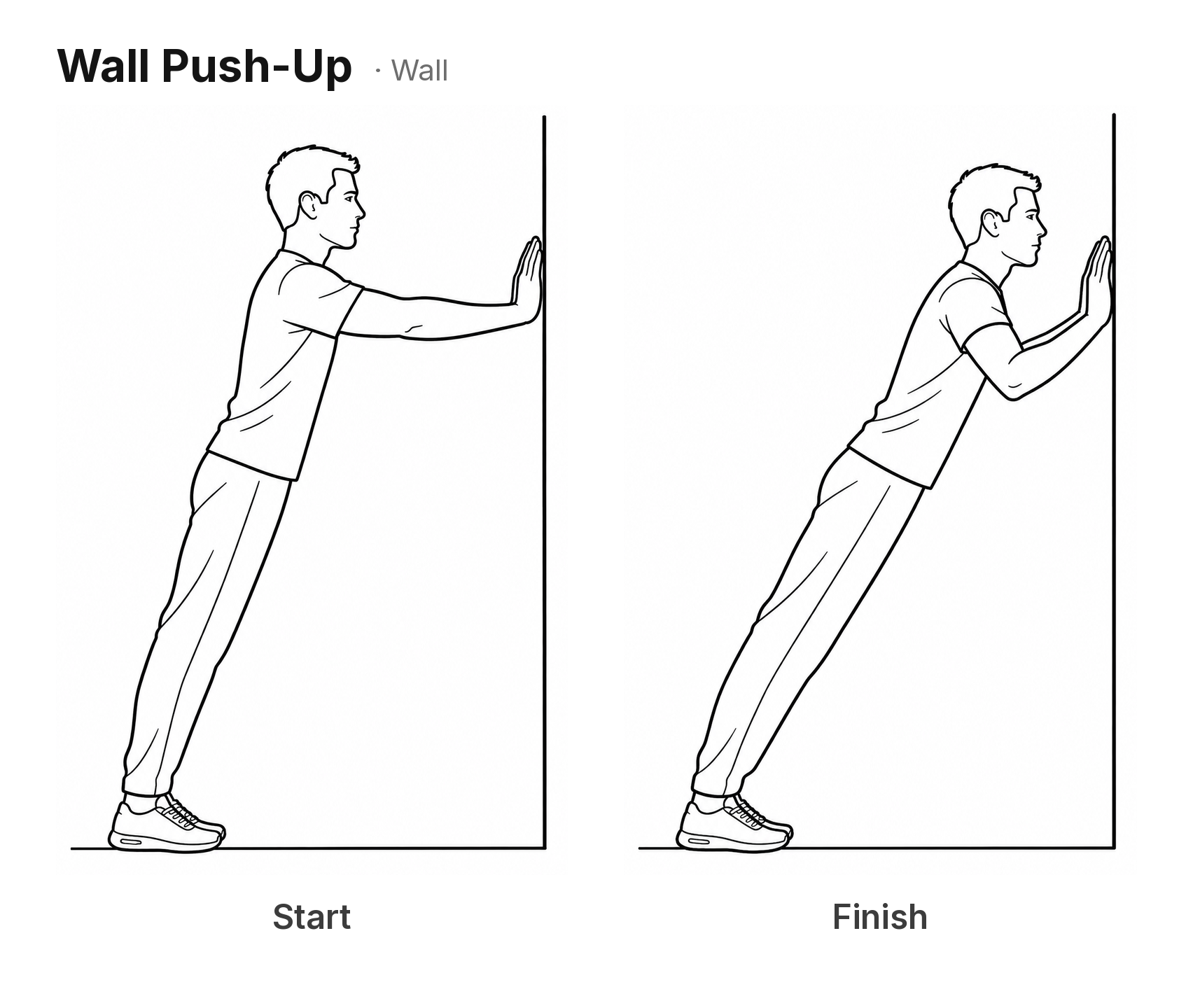
2. Wall push up
This builds pushing strength, which is how you get up off the floor, with zero risk of being stuck under anything.
The cue: "Hands at shoulder height, body in one straight line, bend the elbows like arrows pointing behind you, then press the wall away."
The common mistake: The hips. People bend at the waist and leave their hips behind, which turns it into a lean instead of a push.
Easier: Step closer to the wall. Harder: Step further away.
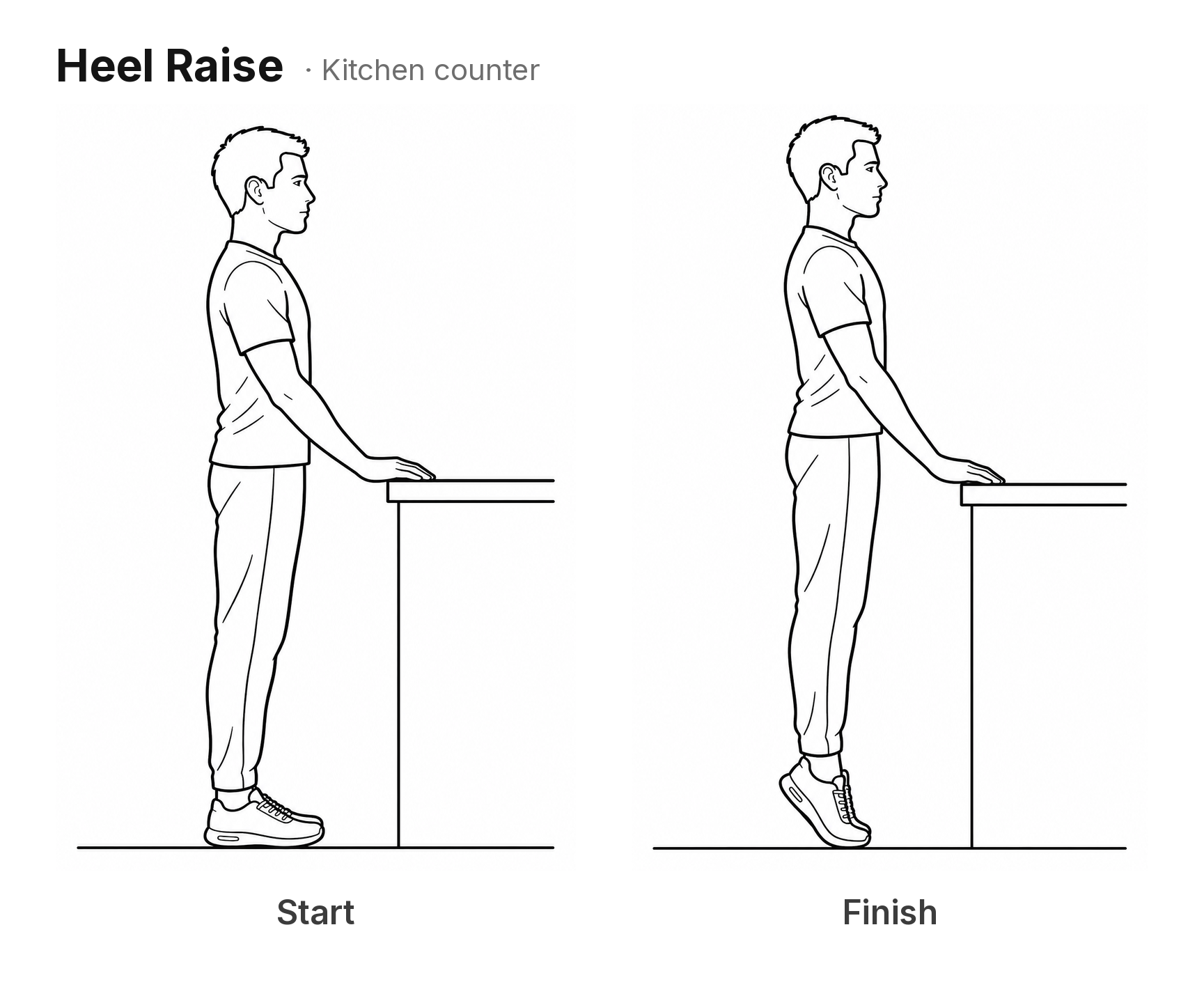
3. Counter heel raise
Calf strength matters more than people think. It is push off power for walking and stairs, and it is one of the first things to quietly fade.
The cue: The counter is a balance aid, never a crutch. "Fingertips resting, so the legs do the lifting and the hand just keeps you honest." Up slow, pause at the top, then lower for a slow three count.
The common mistake: Dropping down fast. The lowering is where most of the benefit lives.
The ten-minute routine
Do three rounds. Each round: 8 sit to stands, 8 wall push ups, 10 heel raises, then rest about one minute, longer if you need it.
Breathe normally, and count out loud if it helps. If 8 feels like too many, do 5. If the third round feels easy after a week or two, slow every repetition down before you add more reps. Ten minutes, no equipment, and you have trained your legs, your pushing muscles, and your balance.
Safety first
Check with your doctor before starting, especially with heart conditions, recent surgery, or dizziness. Set up next to a counter or sturdy chair so support is always within reach.
Mild muscle effort is fine and expected, and sore muscles the next day are normal. Stop if you feel chest pain, sharp joint pain, dizziness, or unusual shortness of breath. If something feels wrong, sit down, rest, and talk to your doctor before trying again. Sharp pain in a joint is information, and the answer is to make the move smaller or shallower, never to push through it.
Your first week
Three days, ten minutes each, with a rest day between. That is the whole assignment. Attach it to something you already do. After morning coffee works for most people.
The win to aim for is simply three checkmarks on the calendar. Someone who does three short sessions has built something a person who did one heroic hour and quit never will: evidence they are someone who shows up.
Why ten minutes
The gap between zero and ten minutes changes lives, and the gap between ten and sixty mostly changes schedules. Most people who quit exercise never actually failed at exercise. They failed at fitting an hour into their life. Ten minutes removes the excuse, fits before breakfast, and builds the habit first. The strength follows the habit, never the other way around. That is the whole idea behind my book, Don't Wait for January: stop waiting for the perfect January, and start with ten minutes now.
For more ideas, the National Institute on Aging offers free exercise and physical activity resources, including a guide to four types of exercise.
Start before you feel ready, and start smaller than you think you should. Strength after 60 is absolutely buildable, and ten minutes done regularly beats the perfect plan you never start.