Relationships
Have We Lost the Art of Dropping In?
When I was a kid, at least twice a week one of my mother's friends would arrive unannounced for coffee. These type of spontaneous visits rarely exist now. Why is this and what have we possibly lost as a result?

I grew up in a house where the door was always about to open.
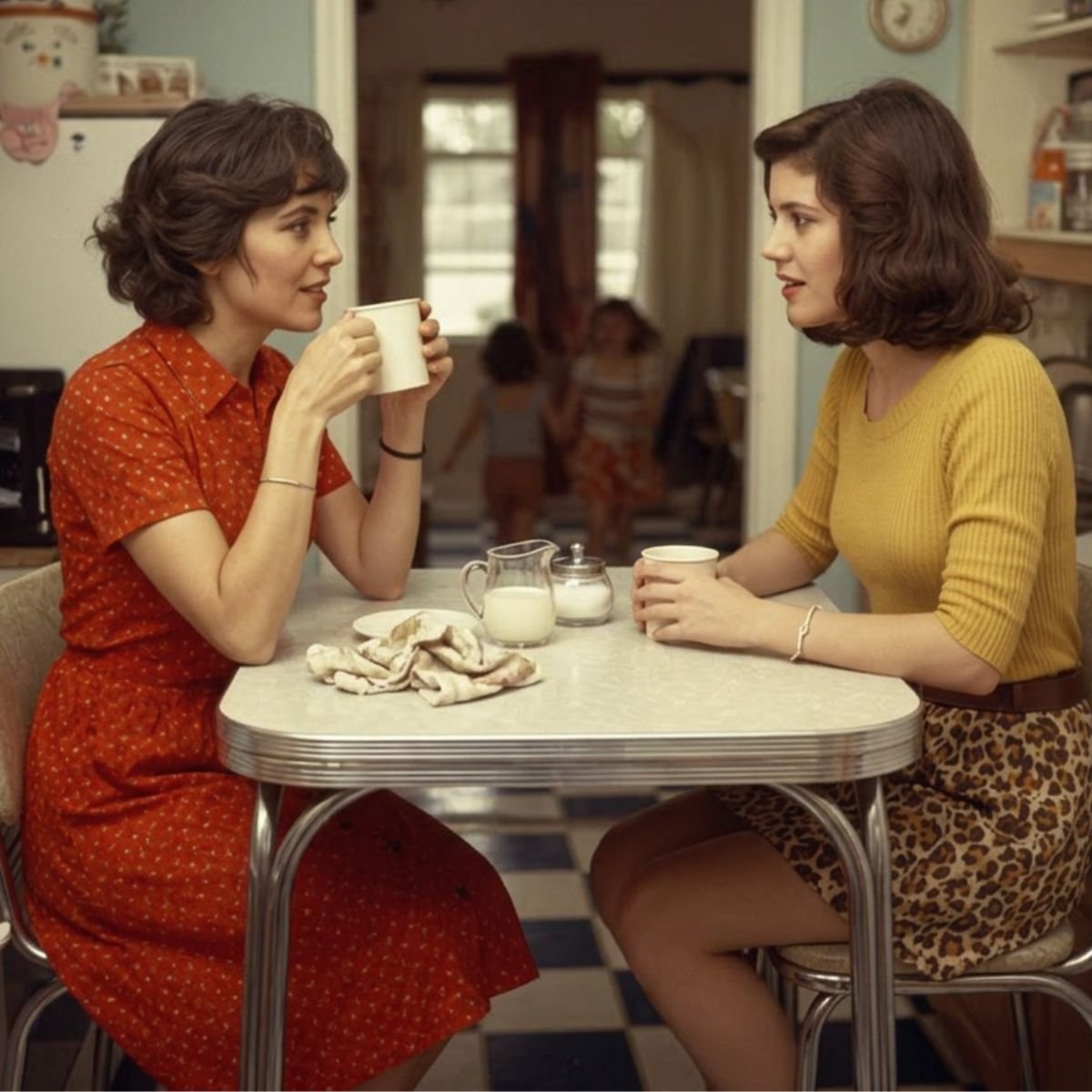
At least twice a week, one of my mother's friends would arrive unannounced. A simple knock followed by the click of the door handle and then someone was at the kitchen table before the kettle had even been filled. There was no text or phone call received ahead of time. No tidying up because company was coming. Just a knock, and in they would come.
The visits were never long. Forty-five minutes, maybe an hour. Just two women sitting at a kitchen table talking about the ordinary texture of their lives. The kids, the teachers, a situation one of them didn't quite know how to handle.
They exchanged ideas the way people exchange tools: here's what I tried, here's what worked, here's what didn't. There was no Google to consult, no chat with AI to return a list of curated solutions. The only resource either of them had was the lived experience of someone who knew them. The kitchen table was the search engine. The friend was the result.
I started to wonder if we have lost something in letting this experience go. And more importantly, have we even noticed?
What May Have Changed
We are certainly busier. And the era of the stay-at-home mom is largely gone, along with the unstructured afternoon hours that made spontaneous visits possible. If you want to see someone now, we often negotiate it - back-and-forth texts until we land on a date that works for everyone, sometimes weeks away. By the time we finally sit across from each other, the moment that made us reach out may have long passed.
But I think busyness alone doesn't explain the walls we've built. When we imagine someone dropping by unexpectedly today, many of us may feel a quiet flicker of anxiety. Are the dishes done? Are the shoes all over the floor? We want the house to look, even briefly, like our lives are organized and in control.
And then there is also another thought: do I look ok?
The house has to be ready. And so, it seems, do we. Hair, clothing, the face we present to the world. I believe this need to be composed before we can be seen has crept up on us quietly and I wonder what it says about what we think friendship actually requires of us.
The Performance of a Perfect Life
As this slowly crept up on us, I believe social media has actually just made things worse. For example, in our social media feeds we may see a friend's family photograph taken in front of a monument. Everyone is smiling, the light falling just right. What we don’t see is the argument in the car on the way there, or the relationship held together some days more by habit than happiness.
What I think is happening is that we've begun applying this same filter to our actual lives.
The friend at the door isn't a stranger. They are someone who has known us for years, who has their own chaos at home, who is not arriving to inspect our kitchen floor or our appearance. And yet we hesitate because somewhere we absorbed the idea that we owed the people closest to us a tidy house and looking pulled-together before we deserved their company.
This irony is not lost on me.
We will share a carefully filtered image of ourselves with thousands of strangers online without hesitation. But we hesitate to open the door to a friend because we aren’t ready for company.
Whereas the women at that kitchen table weren't performing anything. They arrived as they were and stayed as they were. That willingness to be seen - I see your real life and I'm not going anywhere - is one of the most quietly bonding things one person can offer another. When we insist on perfection before we open the door, we can dismantle the very conditions under which genuine intimacy is possible.
Are We Truly Connected - Or Just Occupied?
To be fair, the drop-in hasn't disappeared entirely. For many people it has migrated to the workplace - the colleague at our office door, the impromptu coffee between meetings. These moments are real.
But I think it's worth asking: are these people our friends or our colleagues? The connection, however warm, is largely structural. We didn't choose to be in each other's lives so much as we ended up there together.
Which raises something I believe deserves more attention: what happens when we retire?
For many people, retirement is the moment the structure disappears and the silence arrives. The colleagues who felt like friends don't tend to drop by once there's no longer a building to share.
If the habit of truly chosen connection was never built outside of work, retirement can leave people suddenly and surprisingly alone. Not because anyone left, but because the scaffolding that held everything together was dismantled the day they cleaned out their desk.
The science supports what many of us have quietly felt.
The Harvard Study of Adult Development - one of the longest-running studies of human wellbeing ever conducted found that close relationships, more than money or achievement, are what keep people healthy and happy as they age.
And in his 2023 advisory Our Epidemic of Loneliness and Isolation, U.S. Surgeon General Vivek Murthy declared loneliness a public health crisis, noting its effects on physical health are comparable to smoking fifteen cigarettes a day. We are, in the most literal sense, risking our health by losing each other.
I believe that this spontaneous drop-in was doing far more work than we ever gave it credit for.
Finding Our Way Back
To find our way back, I don’t think any of this requires a grand gesture. I believe it begins with something much simpler: a willingness to lower the bar and drop our filters for what we believe a visit should be.
What if we texted someone "I'm around this afternoon" instead of negotiating a date three weeks out? What if we let someone in before the house was ready and let that vulnerability be the point?
The mess isn't the obstacle to connection. It may, in fact, be the connection. The moment a friend walks into our real life and stays anyway is the moment they become someone who truly knows us.
I believe we knew how to do this once. And I believe we can choose to do it again. The door is still there. We just have to be willing to open it no matter what it looks like on the other side.