Health
The Streaming Sit Show: Discovering Just How Easy It Is To Get Stuck
Streaming television is designed to pull you in and entice you to stay and watch. But this can be a dangerous thing - especially if you're older.

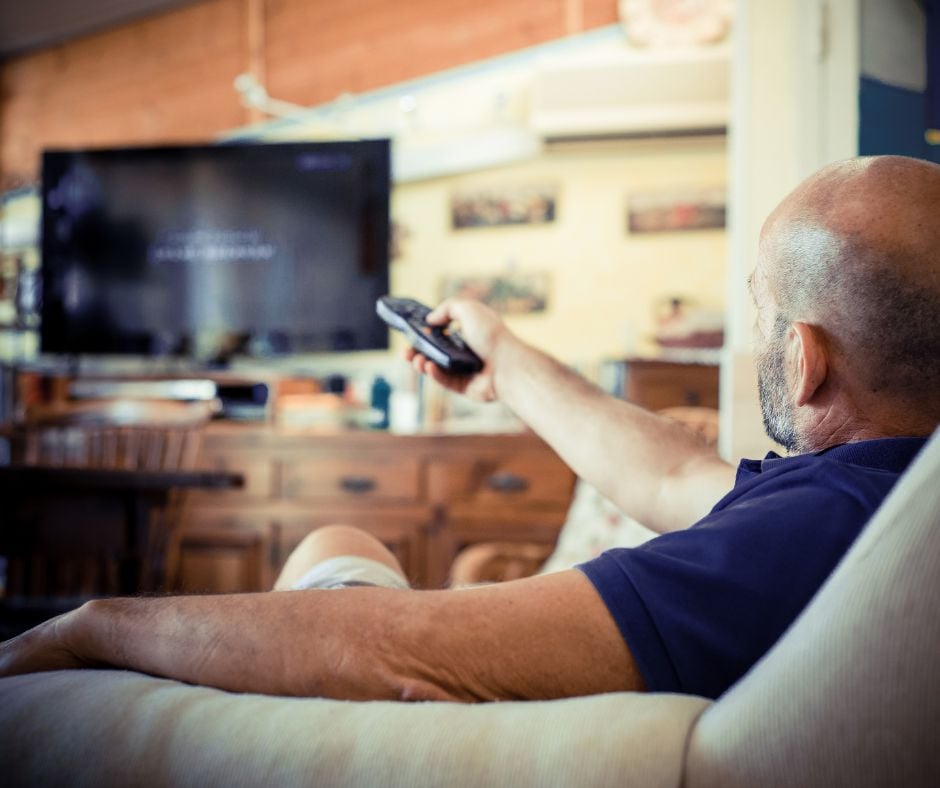
It all started innocently enough after I left my corporate career years ago. One day, I didn't have that much happening and it was cold out. So rather than heading out the door, I decided I'd watch a series I had been meaning to see. I thought, "how bad could just watching one episode be?".
That series was Breaking Bad.
But as soon as I started, I could feel the pull. I discovered just how easy it was to push the "watch next episode" button. Next thing you know, I found myself obsessing over watching the next episode and then streaming two or three and even sometimes four in a row. I recognized, in that moment, a potential addictive challenge I might face if I didn't intentionally find something more meaningful to do with my newfound freedom.
I fortunately managed to step back.
The Perfect Sit Storm: Retirement and Great Television
Here's what I understand now: in that moment, I wasn't undisciplined or lazy. I'm someone who fell into a trap that's designed to be easy to fall into, especially at this life stage.
When you leave a career - whether through retirement, semi-retirement, or a major life shift - something significant often happens. For decades, your days may have been structured for you. Get up, get dressed, go to work, come home, complete your other obligations and activities and when that's all done - then watch TV. Your calendar is full. Your purpose is clear.
Then suddenly, none of that exists anymore.
Research describes retirement as "a psychosocial process of identity transition and search for meaning," where the challenge lies in creating a new sense of self once the old one no longer fits. For some people, this transition can be liberating. But for many, it can be deeply disorienting.
And that's when the sofa can become something very easy to fall into.
Streaming services are engineered to be addictive. The auto-play feature. The cliffhangers at the end of each episode. The algorithm that knows exactly what kind of show will keep you watching. And these are good shows - in fact, really good shows. Complex characters, compelling stories, production values that rival movies. They're designed to be binge-worthy.
So if you are a person with unstructured time, a possible loss of purpose and access to genuinely fascinating entertainment, of course the "watch next episode" button gets pushed. It's not a character flaw. It's built into the algorithm.
The Cost of That Easy Choice
But here's what I didn't fully understand while I was bingeing: beyond feeling like I lost a day, there's even stronger reasons I should have cared about what I was doing.
First of all, this can be habit forming. It's been reported that adults 65 and older watch an average of 6.5 hours of television per day - and that's nearly double the average for any other age groups - and with this extended screen time comes with some real health consequences.
Research from the English Longitudinal Study of Aging found that watching television for more than 3.5 hours per day is associated with a decline in verbal memory over time. Those who watched that much TV showed an average decline of 8-10% in word-related and language-related memory - double the decline for people who watched less.
Add to this, a study involving over 1.2 million participants discovered some evidence that watching 4 or more hours of television per day is associated with an increased risk of cognitive impairment and this risk increases significantly at 6+ hours per day.
Beyond cognition, excessive TV watching is associated with sedentary behavior, poor physical health, disrupted sleep, and social isolation. The very things that happen when you're sitting on the sofa for hours every day.
And here's the part that struck me hard. Lonely or socially isolated older adults may use television as compensation for lack of social interaction or because they have little else to do.
If you really think about it, this could beome a vicious cycle. If you've lost structure and purpose after retirement, you might turn to the TV. The more TV you watch, the less you engage with the world. You could then become more isolated which then sends you back to watch more TV to fill in this space. One neverending loop.
The Work/Life Balance Principle
Years back someone once told me something I've never forgotten about work/life balance. They said that in order to ensure your life remains balanced, you need to make sure you have something just as interesting or even more interesting to pull your attention and interest so that you make sure it becomes a priority for you outside work.
While I was working, I had to continually work on my balance. Work took up significant time and mental energy. But I did ensure that the things I did outside of work always had priority as they were important to me.
But in retirement, when the work is gone, there may be nothing inherently more interesting than the perfectly crafted world of a streaming series. Unless you intentionally create it.
The Way Forward
Now I'm not saying that I don't enjoy a good binge watch. I understand just how easy it is and why it happens. But I also now see the risks of this so if I do plan on bingeing anything, I now plan for it and time box it. Without these limits around me, I know I could easily melt into the sofa.
But the research is clear. Finding purposeful activities, social engagement, and meaningful pursuits help mitigate the risks of depression, anxiety, and cognitive decline in retirement. It's not about being productive or achieving anything - it's about having something that makes you want to turn off the TV.
This might be:
Joining a club or group based on something you love (book club, art class, hiking group)
Volunteering for a cause that matters to you
Doing some part time work you enjoy
Learning something new that genuinely interests you
Reconnecting with friends regularly
Pursuing a hobby or creative interest
Mentoring someone
Contributing to your community
The key is finding something that's compelling enough to compete with the "watch next episode" button. Something that engages your mind, connects you to others, or gives you a sense of purpose.
For me, recognizing that I could easily fall into this pattern and knowing that it's constructed this way, I make sure that I fill my days with other activities and experiences that are more interesting.
So if you happen to find yourself falling into the streaming trap, realize that this isn't a personal failure. First, the shows were developed so that you want to stay and keep watching. But what you do need to do is find something else that is more compelling and interesting to do than sit in front of the TV so you don't stay stuck or get pulled into a never ending sit show.